
Solutions › Network Infrastructure & Engineering
Network Infrastructure & Engineering
Connect people, sites, and systems through a network designed for their work.
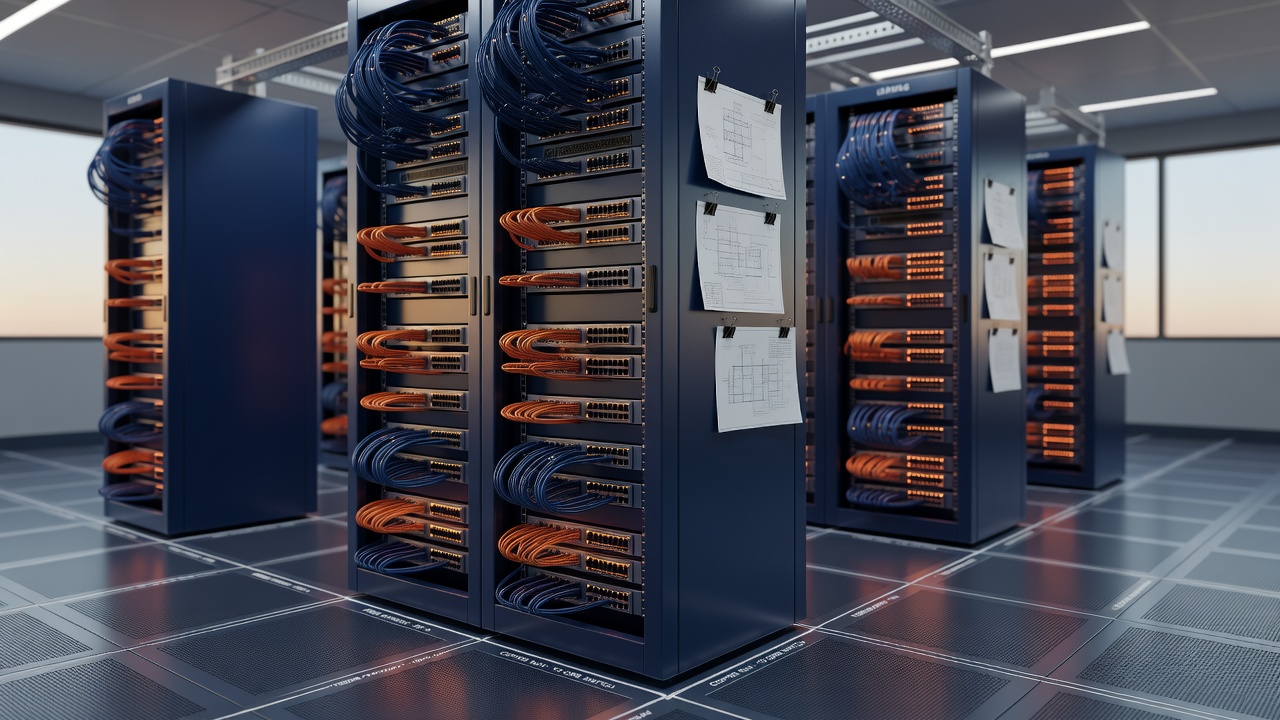
LTS Group Inc. plans, integrates, and documents enterprise networks across offices, operational facilities, cloud services, and distributed environments. We connect network design with application needs, security boundaries, installation coordination, and ongoing support. Our founder has provided full-lifecycle architecture across about 30 concurrent network and systems projects for DoD and Intelligence Community customers.
Whether you are refreshing equipment, connecting locations, or preparing a new facility, we help establish the architecture and delivery plan before changes reach the operating environment.
What we can deliver
- Architecture and site connectivity.
Plan local area networks (LANs), wide area networks (WANs), internet access, and connections between sites and cloud environments. Map applications, traffic paths, dependencies, and responsibilities before selecting the implementation sequence. - Segmentation and controlled access.
Define virtual local area networks (VLANs), routing, firewall boundaries, virtual private networks (VPNs), and administrative access. Relate those controls to the systems and users they serve. - Wireless and workplace integration.
Coordinate Wi-Fi requirements with user needs, device populations, facility conditions, and supporting wired infrastructure. Include collaboration, audiovisual, and physical-security system dependencies in the network plan where they are within scope. - Cabling and deployment coordination.
Develop equipment and connection requirements, rack and port information, labeling expectations, and installation coordination. Work with the responsible trades and providers to align pathways, staging, configuration, and test activities. - Validation and operations.
Verify agreed connectivity and access behavior, document configurations and outstanding issues, and prepare monitoring, maintenance, escalation, and support arrangements.
Give the whole environment a clear foundation
Network changes affect business applications, collaboration, remote access, and the systems connected to a facility. Addressing those relationships early helps teams define the required capacity, connectivity, segmentation, and operational ownership.
We bring the design, configuration, testing, vendor coordination, and documentation into a common workstream. The result is a network plan that installers, administrators, and business owners can use together.
How the five stages fit
- Plan + Design: review the environment and business needs; define topology, segmentation, interfaces, dependencies, and acceptance criteria.
- Build + Integrate: coordinate installation and configure the agreed network, connectivity, and management components.
- Commission + Turn Over: test the required paths and controls, resolve documented issues, and hand over configuration and operating information.
- Standardize + Scale: establish reusable baselines, addressing and labeling conventions, and rollout checklists.
- Operate + Support: provide agreed administration, monitoring, incident coordination, maintenance, and lifecycle planning.
Useful outputs
An engagement can include a network assessment, logical and physical diagrams, equipment and connection schedules, configuration baselines, deployment and cutover plans, test results, asset information, and an operating runbook.
These records make ownership and dependencies easier to understand. They also give future changes a documented starting point instead of relying on individual memory. Included deliverables, specialist responsibilities, maintenance windows, and service coverage are established in the statement of work.
Questions about network delivery
- Can you improve an existing network rather than replace it?
Yes. We can review the current environment, identify constraints, and plan targeted changes. Equipment condition, supportability, business requirements, and integration needs inform the recommendation. - Can you coordinate a network refresh with a facility project?
Yes. We can connect technology requirements with facility schedules, equipment locations, pathways, installation providers, and commissioning activities. Each specialist's design and installation responsibilities remain clearly assigned. - Can ongoing network support follow the project?
Yes. Support can cover the agreed network equipment, connectivity, administration, maintenance, and escalation responsibilities. Coverage is established for the specific engagement.
Start with the connectivity you need
Tell us which locations, applications, or systems need to connect and what is limiting the current environment.